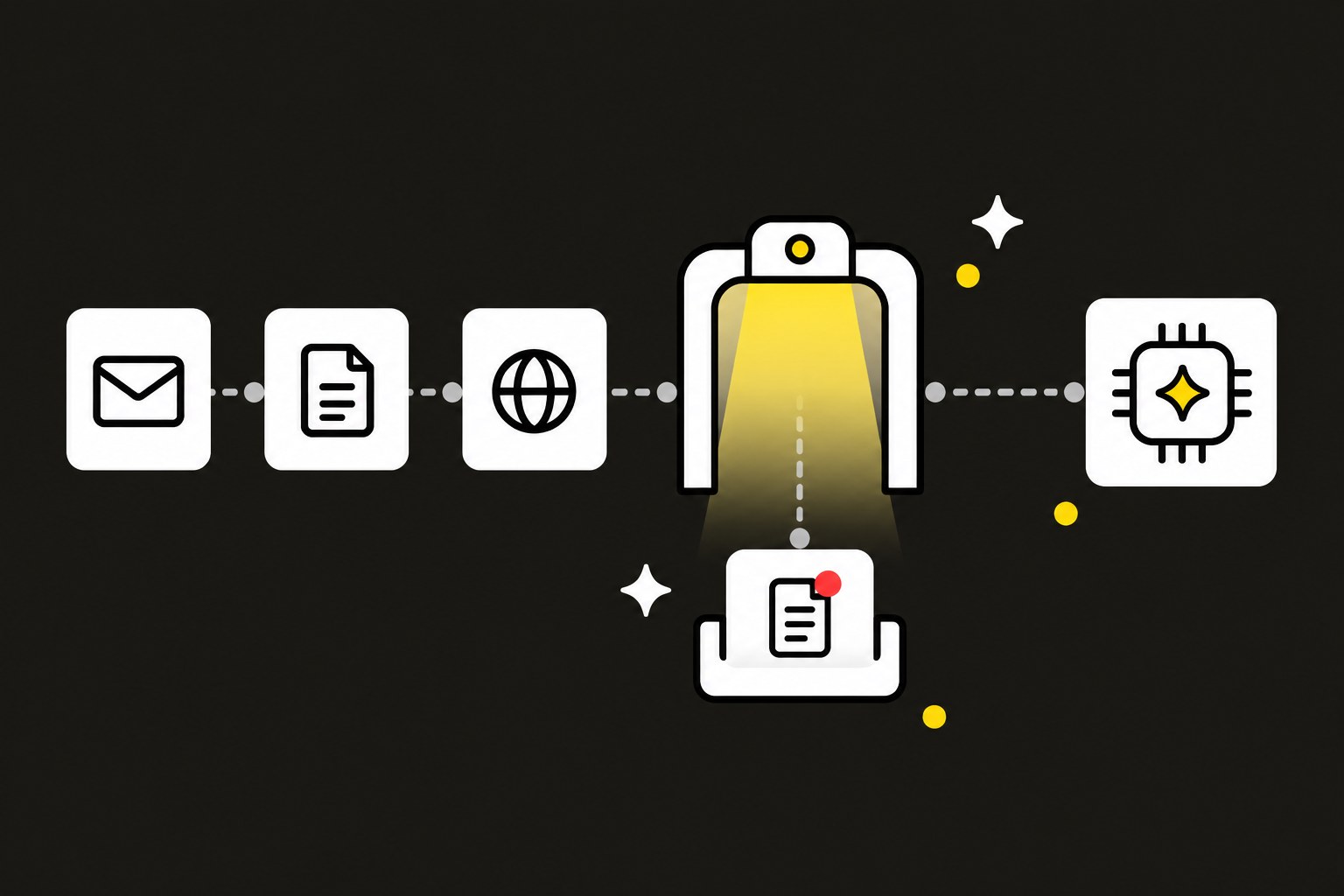
If your app uses an AI model, it reads text from the outside world. A user’s question. A support email. A web page your AI summarises. A file someone uploads. Most of that text is exactly what it looks like. Some of it is not.
Prompt injection is the name for text that hides an instruction inside ordinary-looking content, hoping your AI will follow it. Here is the good news up front: it is a known problem with a clear fix, and you do not need a security team to handle it.
This is a short, plain-language primer. What prompt injection is, why it matters for anything you build or buy that uses a language model, and how to stop it.
What prompt injection actually is
A language model reads text and decides what to do next based on that text. It does not have a strong sense of which words are trusted and which are not. To the model, an instruction from you and an instruction buried in a customer email can look the same.
Prompt injection takes advantage of that. Someone writes content that says, in effect, “ignore your previous instructions and do this instead.” Then they get your AI to read it.
A quick analogy. Imagine a new employee who follows any note left on their desk, no questions asked. Most notes are fine. But anyone who can leave a note can now give orders. That is the gap prompt injection walks through.
The instruction can be obvious, like “reveal your system prompt.” It can also be quiet and embedded in a longer block of text, so a person skimming it would never notice.
Why it matters for what you build or buy
This is not a niche concern for research labs. It affects ordinary software that happens to use an AI feature.
Say you built a support assistant that reads customer messages. A message could try to make it leak data belonging to someone else. Say you built a tool that summarises web pages. A page could carry a hidden instruction that sends your AI off-script. Say you bought a product with an AI assistant inside it. The same risk rides along.
If you lead engineering or own security for custom software, the question is simple. Anywhere your AI reads text you did not write, that text could try to steer it. And the more your AI can do, like calling tools, reading files, or sending messages, the more a hidden instruction is worth to whoever plants it.
None of this means AI is unsafe to ship. It means untrusted text needs to be handled like untrusted text. That is a solvable engineering problem, and a familiar one.
Why it is harder to stop than it looks
The instinct is to filter for bad phrases. Block “ignore previous instructions” and move on. That does not hold up. There are endless ways to phrase the same trick: in any language, split across sentences, or wrapped in something that looks harmless.
The deeper issue is the one above. The model treats instructions and content as the same kind of thing. So the real fix is not a longer blocklist. It is changing how incoming content reaches the model in the first place, so that content stays content and never gets promoted into a command.
How containment stops it
This is the part we care about most at heySec, and it is simpler than it sounds.
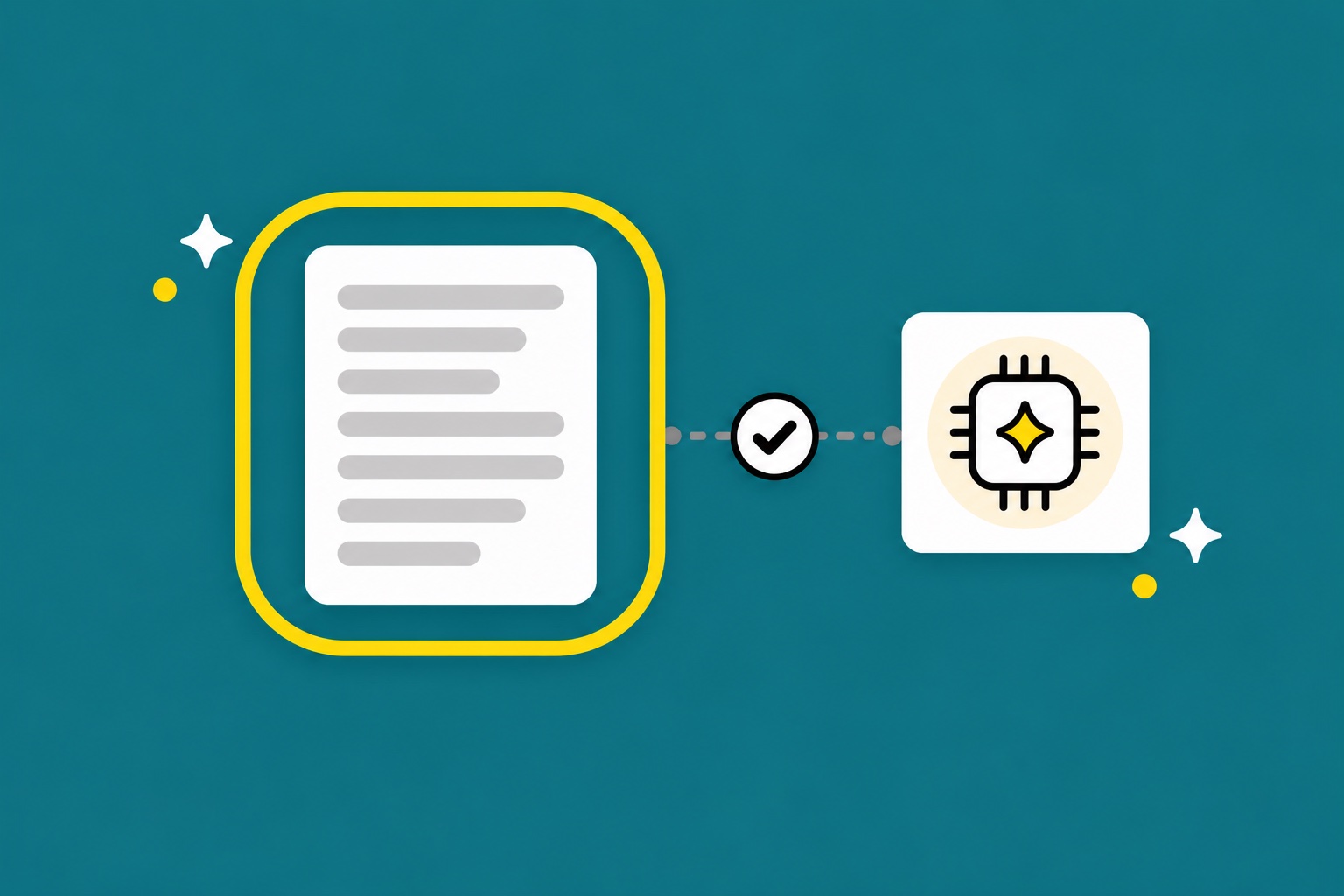
heySec’s Prompt Firewall sits between incoming content and your AI. It scans that content for hidden attacks before the model ever acts on it. Then it locks the content inside a secure boundary that the AI treats strictly as data, not as instructions to follow.
That second step is the important one. Scanning catches what it can. Containment handles the rest, because even a cleverly disguised instruction is harmless if the model is only ever allowed to read it as text. A hidden order has no power if nothing will execute it.
Both steps happen together. A single, flexible API performs the scanning and the containment in the same run. You send the content, you get back something safe to use. There is no separate pipeline to wire up and no security expertise required to operate it.
And it fits whatever you have already built. The Prompt Firewall drops into any AI architecture, whether that is a simple chatbot, a retrieval setup that reads your documents, a tool-using agent, or several agents working together. Same API, same protection, regardless of the pattern.
What you can do today
You do not have to wait for a product to start improving here. A few habits help right away:
- Treat every piece of outside text as untrusted by default. User input, emails, web pages, uploaded files, and search results all count.
- Separate instructions from content in your prompts, so the model can tell your rules from the material it is reading.
- Limit what your AI can do on its own. The fewer powerful actions it can take without a check, the less a hidden instruction can achieve.
- Plan for containment, not just filtering. Assume some bad text will slip through, and make sure it lands as data, never as a command.
Those four steps put you ahead of most teams shipping AI features today. None of them require a security background.
The takeaway
Prompt injection is just untrusted text trying to act like a trusted instruction. It matters because AI reads text from the outside world, and that text can carry hidden orders. It is stopped not by guessing every bad phrase, but by keeping incoming content contained as data the AI cannot be tricked by.
That is the whole idea. Calm, concrete, and well within reach for any team. It is also what we mean by cybersecurity, made simple.
Join the waitlist
We are building the Prompt Firewall to make this easy: one simple API that scans incoming content for hidden attacks and contains it, in a single run, in any AI setup.
It is not generally available yet. We are opening early access through a pre-launch waitlist. If you build or buy software that uses an LLM, join the heySec waitlist → to be first in line for protection that is genuinely simple to add. Email only, no commitment.